

WhatsApp became the first messaging app available on all platforms, but it wasn't the first. BlackBerry Messenger was the first messaging app, available only within the Canadian company's ecosystem. While it eventually reached other platforms with the rise of WhatsApp, it was too late, as it offered nothing truly new.
Over the years, more messaging apps have entered the market, such as Line, Telegram, Viber, WeChat, and Signal . Of all these, only Telegram has managed to maintain its market position , and as of January 2021, it already boasts over 500 million users.
Line is a widely used application, especially in Japan (where it originated), while Viber is widely used in Arab countries and WeChat mainly in China, because there are not many other options allowed by the Chinese government.

Telegram has managed to reach the entire world and maintain its position by continuously adding new features, features that, for reasons of privacy and data collection, will never be available on WhatsApp.
Below we show you the main differences between mobile messaging applications and what data each one collects, so you can find out which application best suits your preferences and needs.
WhatsApp vs Telegram vs Signal vs Messenger vs Apple Messages
Message types
| Telegram | Signal | Facebook Messenger |
Messages Apple |
||
|---|---|---|---|---|---|
| Group messages | Yes | Yes | Yes | Yes | Yes |
| Voice calls | Yes | Yes | Yes | Yes | No (Yes via FaceTime) |
| Video calls | Yes | Yes | Yes | Yes | No (Yes via FaceTime) |
| Group video calls | Yes (up to 50 with Messenger) | No | Yes (up to 8 parties) | Yes (up to 50 parties) | No (Yes via FaceTime) |
| Voice messages | Yes | Yes | Yes | Yes | Yes |
| Video messages | No | Yes | No | No | Yes |
| Temporary messages | Yes | Yes (in secret chats) | Yes | No | No |
As we can see in the table above, Telegram is the only app, along with Apple Messages (which offers this feature through FaceTime), that doesn't allow group video calls , only individual ones. Telegram plans to add this functionality in 2021. Both apps allow us to send video messages, without having to use FaceTime on the iPhone.

Data we can share
| Telegram | Signal | Facebook Messenger |
Messages Apple |
||
|---|---|---|---|---|---|
| Pictures | Yes | Yes | Yes | Yes | Yes |
| Videos | Yes | Yes | Yes | Yes | Yes |
| GIFs | Yes | Yes | Yes | Yes | Yes |
| Window Stickers | Yes | Yes | Yes | Yes | Yes |
| Location | Yes | Yes | Yes | Yes | Yes |
| Contacts | Yes | Yes | Yes | Yes | Yes |
| Archives | Yes (100MB limit) | Yes (up to 2GB) | Yes | Yes | No |
| Window Stickers | Yes | Yes (animated) | Si | Si | Yes |
Telegram not only allows us to share any type of file, not just images and videos, but also offers a maximum limit of 2GB per file , compared to the measly 100MB offered by WhatsApp.
Security
| Telegram | Signal | Facebook Messenger |
Messages Apple |
||
|---|---|---|---|---|---|
| End-to-end encryption | Yes | Only in secret chats | Yes | Yes | Yes |
| Access blocking | Yes | Yes | Yes | Yes | No (via device) |
| Record lock | No | Yes | Yes | No | Yes |
| Lock screenshots | No | Yes | Yes | No | No |
Telegram became very popular from its inception thanks to being a cloud-based storage for all our data, allowing us to use this application from any device and continue conversations, something that WhatsApp, Signal, and Facebook Messenger do not offer, but Apple Messages does.
This is because the encryption used in Telegram is not end-to-end ; however, all content is encrypted, and the encryption keys are not located on the same servers where the data is stored.
Another advantage offered by both Telegram and Signal is the ability to prevent recipients from taking screenshots of our conversations , thus avoiding leaving any evidence.
All apps allow us to set up a lock to prevent anyone who has access to our smartphone when it's unlocked from accessing the apps. In the case of Apple Messages, this protection is only available if the device is locked.
What data does each user company store

When something is free, we are the product . This is one of the most popular sayings in our time, where most internet services are completely free.
Why is this? User data allows large companies to offer personalized campaigns based on users' searches and preferences. The two largest advertising companies today are Google and Facebook.
Amazon, although not in the advertising business, also collects a large amount of data from its users , which allows it to make personalized offers to its customers, analyze market trends, know what people need... data that it also uses to create new products.
The various privacy scandals that have surrounded Facebook in recent years seem to have been the wake-up call many users needed to start taking seriously how large companies handle their data.
The more data an application is able to collect, the better advertising campaigns it can offer its clients.
Example of how they use our data
If these companies have data about our location, our age, our marital status, and our searches, they analyze all the data and filter it so that a client who organizes wedding banquets can commission an advertising campaign limited to a city and an age range among the people who have previously performed a search with the word wedding.

What these companies cannot do is focus ads solely on women or men , or on people with a specific skin color ... because the law prohibits it as discriminatory, although until recently Facebook did offer that option, an option that Google has never offered (it must be said).
Data that Signal collects

The only information that Signal collects is the phone number , the number associated with the account.

Data collected by Apple Messages
Through the Messages app, Apple does not collect any of the data that can be shared, beyond what it can collect anonymously through iOS.
Data collected by Telegram
The data that Telegram collects includes the phone number, username (this platform can be used without an associated phone number ), contacts, and account name.
Data collected by WhatsApp

Due to the large amount of data that WhatsApp collects, I will now list it:
- Device Type
- Datos de uso
- Purchases
- Location
- Contact details
- User content
- Error diagnostics
- Purchases
- Financial information
- Contacts
In the description of the WhatsApp application that we can find in the App Store, the data collection is separated according to its purposes :
- Developer advertising or marketing
- Data analysis
- Product customization
- Application functionality
- Other purposes
Data collected by Facebook Messenger
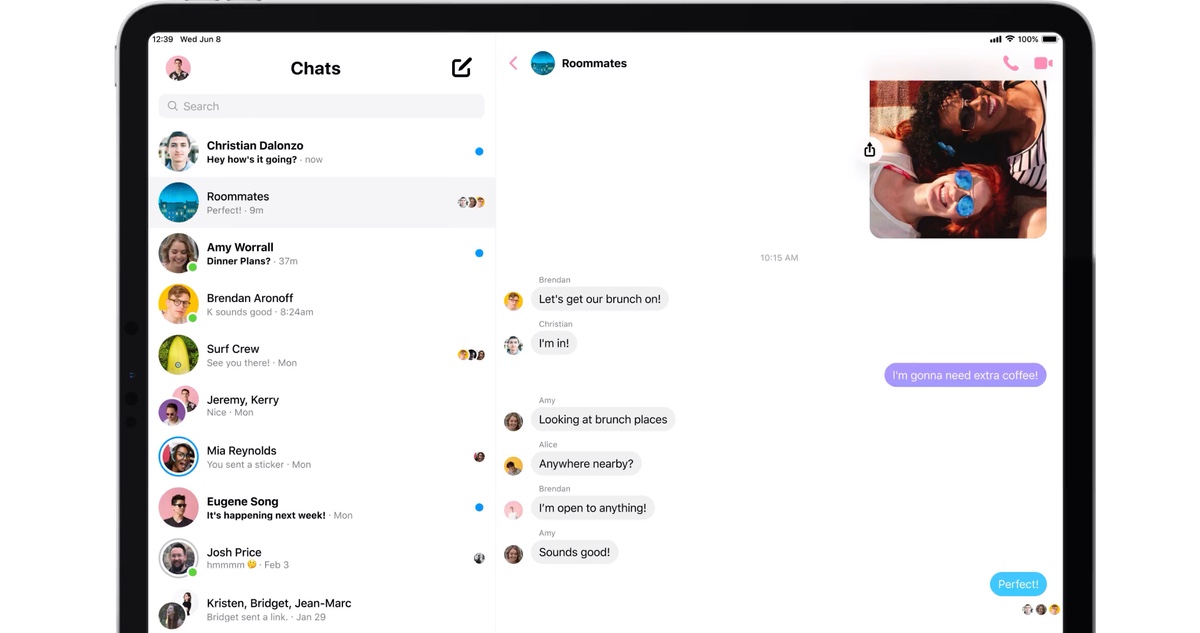
The amount of data collected by the Messenger app is insane ; there's no other way to describe it. Besides collecting the same data as WhatsApp and categorizing it according to its purpose, it also collects:
- Search history
- Browsing history
- Health and fitness
- Sensitive data


